The Hidden Problem with Pre-Installed Access Panels in Ventilation Systems
May 18, 2026
8 min
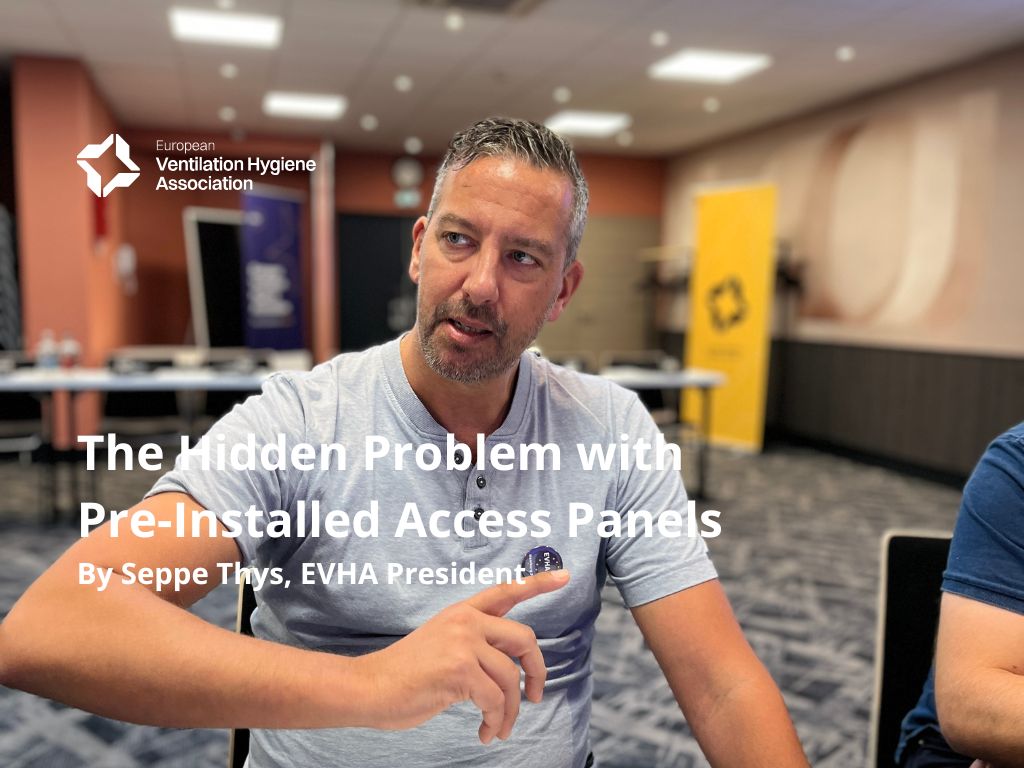
Ventilation hygiene starts with proper access
Without correctly designed access panels, effective duct inspection and ventilation cleaning become extremely difficult — sometimes even impossible.
In this article, Seppe Thys discusses why access planning must be considered already during the construction phase and how poor accessibility impacts indoor air quality, maintenance costs and compliance with ventilation hygiene standards.
Why Pre-Installing Access Panels is a Construction Trap
During the design and construction phase of a new building, engineering offices and construction companies strictly follow the rulebook. In a well-intentioned effort to facilitate future ventilation cleaning and to ensure compliance with EN 12097 (the European standard for ductwork accessibility), blueprints routinely specify the immediate installation of dozens of inspection doors (access panels) throughout the new ventilation network.
While this looks perfect on a CAD drawing, seasoned ventilation hygiene specialists like Hamster Cleaning consistently offer a piece of counter-intuitive advice to building contractors: Do not pre-install access panels during construction. Wait until the first cleaning and validation cycle.
Here is why delaying this installation saves time, cuts costs, and prevents structural headaches.
Why Access Panels Become Blocked in Real Buildings
In a perfect world, buildings are constructed exactly as designed. In the real world, site conditions force adjustments.
Installing an access panel too early in the construction cycle often leads to a common, albeit unintentional, problem. After the initial installation, the ductwork is passed to other trades. It is very frequent that a subsequent contractor will install obstructions—like an electrical cable tray, a data bundle, or a water pipe—directly in front of the recently placed inspection door.
The Result: The access panel becomes completely useless, failing compliance audits before the building even opens.
The Solution: Installing panels during the first cleaning cycle ensures they are placed around the true "as-built" environment, completely avoiding obstructions from other trades.
Modern Ventilation Cleaning Methods vs. Traditional Access Requirements
The EN 12097 standard provides a strict framework for where access doors should be placed. However, blindly following the text of the standard often leads to a massive over-specification of panels.
The Over-Installation Problem: Strict adherence requires panels at almost every minor change of direction and at incredibly short intervals. This drives up initial material and labor costs significantly.
The Modern Solution: The standard was written with legacy cleaning methods in mind. Modern ventilation hygiene methods (e.g. 95G method) rely on high-torque, long-distance pneumatic brushes, flexible shaft systems, and advanced remote inspection cameras. Modern machinery can navigate much longer distances and tighter bends from a single point of entry.
System Integrity: Every access panel cut into a duct introduces a potential point for air leakage and potentially disrupts thermal insulation. By waiting for the first maintenance cycle, technicians can use modern equipment to minimize the total number of holes cut into the system while still achieving full compliance.
Optimizing Access Panel Placement for Long-Term Maintenance
When access panels are guessed during construction, you invariably end up with doors where they aren't needed, and zero doors where they are desperately required (such as directly before a hidden fire damper or silencer).
Waiting until the system is fully operational and undergoing its first professional validation allows hygiene experts to plot the exact spots needed for lifelong maintenance. You install the precise number required—no more, no less.
Once the access panels have been installed, the precise locations should be used to update the CAD drawings.
A Bit of Industry Humor:
"Designing a ventilation system with pre-installed access panels is like buying a tailored suit before you've finished growing. It looks great on paper, but by the time the electrician installs their cable trays and the plumber runs their pipes, your 'perfect fit' is completely unwearable. In our industry, an access panel blocked by a cable tray isn't an asset—it’s just an expensive piece of metadata."
A Smarter Approach to Ventilation System Accessibility
For building companies and engineering offices, the goal is to hand over a compliant, efficient facility without burning budget on unnecessary components. By shifting the installation of EN 12097 access panels from the construction phase to the initial maintenance phase, contractors can guarantee:
100% Accessibility: Zero blocking from other trades.
Cost Optimization: Fewer panels purchased and installed.
Enhanced Duct Integrity: Fewer structural cuts and potential air leaks.
Sometimes, the best way to move forward on a project is to leave the ductwork sealed until the specialists arrive.
Ventilation hygiene requires long-term accessibility
Properly accessible ductwork is essential for effective inspection, ventilation cleaning and compliance with modern indoor air quality standards. Poorly positioned or blocked access panels can significantly complicate future maintenance and increase operational costs throughout the building lifecycle.
Read the original article published by Seppe Thys on Linkedin : Why Pre-Installing Access Panels is a Construction Trap

[ contact us ]
Got a question?
Want to join?
Contact us.
Are you interested in becoming a member or simply have questions about European Ventilation Hygiene Association?We’d love to hear from you, so don’t hesitate to contact us today.We’re here to assist you with your inquiries.
" height="26.000000944140503px" id="cHSbhkX1G" transform="translate(2.99 3)" width="26.009582257265002px"/><path d="M 0 32 L 0 0 L 32 0 L 32 32 Z" fill="transparent" height="32px" id="C8bAbA26D" width="32px"/></svg>)
" height="20px" id="NXOZ6qgpG" transform="translate(2 6)" width="28px"/><path d="M 0 32 L 0 0 L 32 0 L 32 32 Z" fill="transparent" height="32px" id="PA_FVUxeC" width="32px"/></svg>)
© Copyright Notice EVHA 2025
EVHA